


General Rules on the Age of Criminal Responsibility
The age of criminal responsibility is defined by the Criminal Code of Ukraine, specifically in Part 1 of Article 22. As a general rule, individuals who have reached the age of sixteen at the time of committing a criminal offense are subject to criminal responsibility.
Criminal responsibility may also apply from the age of fourteen for certain criminal offenses. In general, the issue of juvenile criminal responsibility is addressed in Chapter XV of the Criminal Code, which covers various aspects and specifics related to this category of offenders. These specifics will be discussed in the following sections.
When Criminal Responsibility Begins at Age 14
The conditions for criminal responsibility for juveniles under sixteen years old are set out in Part 2 of Article 22 of the Criminal Code. This article defines the specific criminal offenses for which individuals between the ages of fourteen and sixteen can be held responsible.
According to the Code, such offenses include:
- Intentional homicide (Articles 115–117)
- Attempt on the life of a state or public figure, law enforcement officer, member of a public formation for the protection of public order and state border, military serviceman, judge, people’s assessor, or juror in relation to their activities, defense attorney or representative involved in providing legal assistance, representative of a foreign state (Articles 112, 348, 379, 400, 443)
- Intentional grievous bodily harm (Article 121, Part 3 of Articles 345, 346, 350, 377, 398)
- Cruel treatment of animals (Article 299)
- Intentional bodily harm of medium severity (Article 122, Part 2 of Articles 345, 346, 350, 377, 398)
- Sabotage (Article 113)
- Banditry (Article 257)
- Terrorist act (Article 258)
- Hostage-taking (Articles 147, 349)
- Rape (Article 152)
- Sexual violence (Article 153)
- Theft (Article 185, Part 1 of Articles 262, 308)
- Robbery (Articles 186, 262, 308)
- Assault with intent to rob (Article 187, Part 3 of Articles 262, 308)
- Extortion (Articles 189, 262, 308)
- Intentional destruction or damage of property (Part 2 of Articles 194, 347, 352, 378, Parts 2 and 3 of Article 399)
- Damage to transportation infrastructure and vehicles (Article 277)
- Hijacking of railway rolling stock, aircraft, sea or river vessels (Article 278)
- Unlawful seizure of a vehicle (Parts 2, 3 of Article 289)
- Hooliganism (Article 296)
This list is exhaustive — criminal responsibility for other offenses for individuals aged 14–16 is not provided for.
Special Status of Juveniles in Criminal Proceedings
As noted earlier, juveniles who commit criminal offenses are granted special legal status. Chapter 38 of the Criminal Procedure Code of Ukraine governs criminal proceedings involving minors. Article 484 states that criminal proceedings involving minors follow general procedures with due consideration of the special provisions in Chapter 38.
The specifics outlined in Articles 485–497 of the Criminal Procedure Code include:
- Circumstances to be established in proceedings involving minors
- Comprehensive psychological and psychiatric examination of the minor suspect or accused
- Determination of the minor’s living and upbringing conditions
- Participation of the minor’s legal representative
- Procedure for summoning the minor
- Interrogation of the minor suspect or accused
- Presence of a legal representative, teacher, psychologist, or doctor during the interrogation
- Application of precautionary measures to the minor
- Placement of the minor under supervision
- Separation of the juvenile’s criminal offense into a separate proceeding
- Temporary removal of the minor from the courtroom
- Participation in court hearings by representatives of child services and authorized police units
- Procedure for applying compulsory educational measures to the minor accused
What Penalties Apply to Juveniles
The types of penalties applicable to juveniles who have committed a criminal offense are defined in Article 98, Chapter XV “Specifics of Criminal Responsibility and Punishment of Juveniles� of the Criminal Code of Ukraine. Articles 99–102 further clarify each form of punishment.
A fine may be imposed only if the juvenile has independent income, funds, or property that can be subject to collection. The amount of the fine is determined by the court based on the severity of the offense and the minor’s financial condition — up to 500 times the non-taxable minimum income. If the minor does not have income or property, and the offense carries a fine exceeding 3,000 times the non-taxable minimum, the court may replace the fine with community or corrective labor.
Community and corrective labor are carried out in the juvenile’s free time outside of school or work. Such labor may be assigned to minors aged 16–18 for a duration of 30 to 120 hours, with no more than two hours per day. Corrective labor at the minor’s place of work may be assigned for a term of 2 months to 1 year, with a deduction of 5–10% of wages to the state budget.
Probation supervision is carried out in accordance with Article 591 of the Criminal Code. This form of punishment limits the rights and freedoms of the convicted individual, applying supervisory and educational measures without isolation from society. For minors, the probation term may range from 1 to 2 years.
Imprisonment may be imposed on persons under 18 at the time of committing the crime for a period ranging from 6 months to 10 years, except in cases of especially serious crimes involving intentional homicide.
Terms of imprisonment:
- For non-serious crimes — up to 4 years
- For serious crimes — up to 7 years
- For especially serious crimes — up to 10 years
- For especially serious crimes involving intentional killing — up to 15 years
Conditions for Releasing Minors from Criminal Liability
According to the provisions of the Criminal Code of Ukraine, a minor who commits a criminal misdemeanor or a negligent non-serious crime for the first time may be released from criminal liability if their rehabilitation is possible without imposing punishment. A minor who has committed a misdemeanor or non-serious crime may also be exempt from punishment if the court determines that due to sincere remorse and further exemplary behavior, punishment is no longer necessary. However, in such cases, the court applies educational measures to the minor.
Educational measures include: warnings, restrictions on leisure activities, and the establishment of specific behavioral requirements. The court may also place the minor under the supervision of parents or guardians, an educational or labor collective (with the consent of the collective), or individual citizens upon their request. Additionally, if the minor is at least fifteen years old and has personal property, funds, or income, the court may impose an obligation to compensate for property damage caused.
Another basis for exemption from criminal liability and punishment for persons who were under 18 at the time of the offense is the expiration of the statute of limitations. This provision is found in Article 106 of the Criminal Code of Ukraine and is applied in accordance with Articles 49 and 80 of the Criminal Code.
Statutes of limitations for minors are as follows:
- 2 years — for criminal misdemeanors
- 5 years — for non-serious crimes
- 7 years — for serious crimes
- 10 years — for especially serious crimes
Time limits for enforcing convictions for persons who committed an offense before turning 18:
- 2 years — if the sentence does not involve imprisonment, or for criminal misdemeanors
- 5 years — for non-serious crimes with imprisonment, and for serious crimes with a prison term not exceeding 5 years
- 7 years — for serious crimes with imprisonment exceeding 5 years
- 10 years — for especially serious crimes with imprisonment
This topic also includes the rules for conditional early release. Under Article 107 of the Criminal Code of Ukraine, persons serving a sentence of imprisonment for a crime committed before turning 18 may be granted early release regardless of the severity of the offense. However, the convicted person must demonstrate genuine rehabilitation through good behavior and a responsible attitude toward work. Importantly, part of the sentence must be served, and the actual time served depends on the severity of the offense. For minors, the replacement of an unserved portion of a sentence with a more lenient one is not permitted.
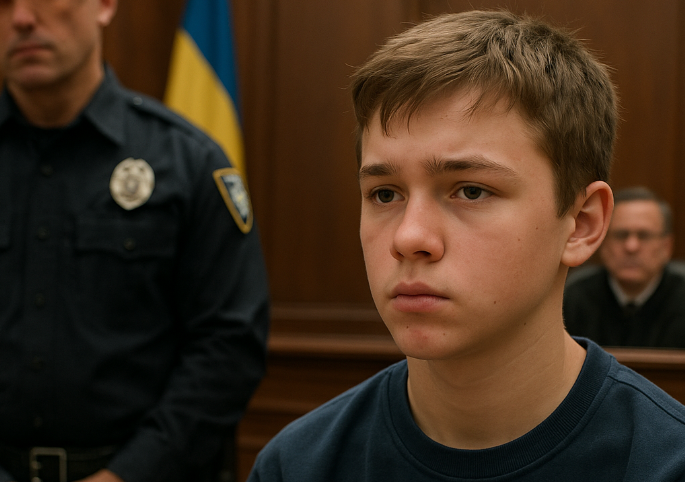
Legal Advice: What to Do If a Child Is Called to the Police
First and foremost, do not panic if your child is summoned to the police. Parents should remain calm and rational to properly understand the situation. Police officers are required to identify themselves and inform the child’s legal representatives about the reason for the summons. By law, the police must immediately notify the parents or legal guardians about the location of a minor if the child is already at the police station. According to the Law of Ukraine “On the National Police,” questioning of a minor is only permitted in the presence of a parent, guardian, teacher, or another legal representative.
In the context of criminal offenses, it is essential to understand the basic rights of the child and their parents. Chapter 38 of the Criminal Procedure Code of Ukraine outlines the specific rules and procedures for criminal proceedings involving minors. It is helpful to familiarize yourself with these rules in advance, in case the need arises. Participation of a legal representative, such as a parent, in criminal proceedings involving a minor suspect or accused is regulated by Article 488 of the Criminal Procedure Code. For example, interrogations and other procedural actions must be conducted in the presence of a legal representative, teacher, or psychologist, and if necessary, a medical professional. Minors and children must be questioned with breaks if the interrogation lasts over an hour, and not more than two hours per day.
Therefore, if your child is summoned to the police, parents should first gather all relevant details and ask the officers for clarification. It is also important to remember that nearly all procedural actions must be conducted in the presence of a legal representative to avoid potential psychological pressure or manipulation of the child’s words. Naturally, it is strongly recommended to contact a lawyer as soon as possible. A lawyer can ensure that the proper procedures are followed and intervene effectively in case of any violations of the child’s or parents’ rights by law enforcement authorities.